
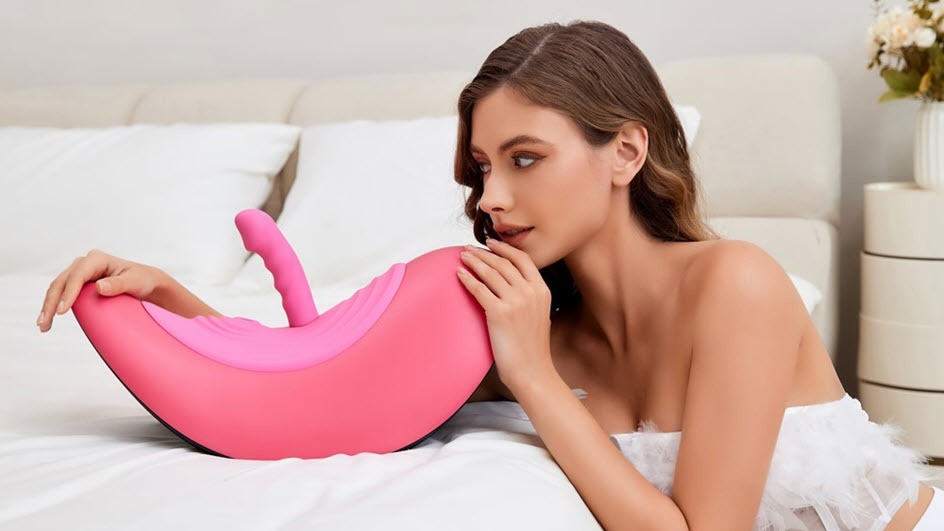
Rocking, rhythm, and hands-free pleasure take center stage in this in-depth review of the Vibepad Ride-On. Tested by mixed groups and solo users, the article explores comfort, control, and how different bodies experience the ride.

There is something inherently theatrical about a ride-on sex toy. It is not discreet, it is not shy, and it does not politely disappear into a bedside drawer. The Vibepad Ride-On arrives with presence. It asks for floor space, body engagement, and a willingness to explore pleasure as something active, embodied, and at times communal. Tested at a private party by two mixed-gender groups and one non-binary solo tester, this was not a quiet, solitary evaluation. It was curious, social, and revealing in ways that traditional solo testing rarely is.
Across all testers, one thing became clear very quickly. The Vibepad Ride-On is not just about penetration or vibration. It is about posture, rhythm, and how the body meets movement. Some loved it instantly. Others wanted more intensity or clearer control. But no one treated it as forgettable.
This review draws from the experiences of two women aged 28 and 41 who tested together, a mixed group of a 30-year-old man and two women aged 26 and 35, and a non-binary tester aged 31. Their impressions, frustrations, delights, and comparisons form a layered picture of what the Vibepad Ride-On does well, where it struggles, and who it may truly be for.
For many testers, the first interaction with the Vibepad Ride-On was shaped less by the attachments and more by the act of sitting. One F28 tester described the immediate surprise of how natural the saddle-like curve felt beneath the body. The height allowed her legs to relax completely, which she emphasized as unusually important. Instead of bracing or holding tension, she could settle into the experience fully.
Her testing partner, F41, echoed this sentiment from a slightly different angle. While her focus was less on clitoral alignment and more on penetration, she noted that the ability to rock and shift positions without losing balance or comfort made the experience feel exploratory rather than effortful. The rocking base was not just a gimmick, it changed how long she wanted to stay engaged.
In the mixed-gender group, the initial impression leaned toward curiosity and excitement. One tester described the rocking motion as immediately intuitive, almost playful, and something that invited experimentation rather than caution. The toy felt stable enough to lean into, even when multiple people were interacting with it socially, adjusting angles, or controlling it remotely.
The non-binary tester approached the Vibepad Ride-On with fewer expectations shaped by gendered marketing. They commented positively on the design and ease of control, noting that the product did not feel restricted to one type of body or identity. That alone made the initial interaction feel more welcoming.
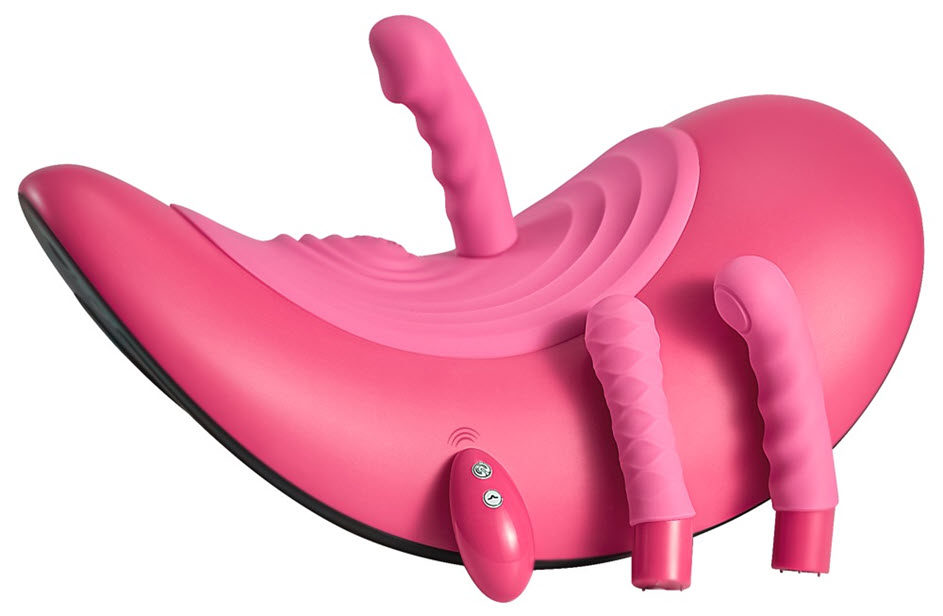
Although the Vibepad Ride-On offers three different attachments, not all were experienced equally. Across testers, the vibrating attachment emerged as the most immediately satisfying. One F28 tester explicitly linked her enjoyment to familiarity. The steady vibration mirrored what she already enjoyed in her personal toy collection, making it easy to relax and build pleasure without needing to recalibrate expectations.
The thrusting attachment resonated most strongly with the F41 tester. She described her body as aligning particularly well with its movement and rhythm, emphasizing that penetration felt intentional rather than mechanical. For her, the value was not speed or intensity alone, but the sense that the toy worked with her anatomy instead of demanding adjustment.
The tapping stimulator received more mixed reactions. While several testers appreciated its conceptual focus on external stimulation, some felt that the intensity ceiling was lower than expected. In the mixed group, multiple people described themselves as accustomed to very strong vibrations. Compared to that baseline, the Vibepad Ride-On felt controlled rather than overwhelming. This was not universally negative, but it did create a divide between those who enjoy layered, building sensations and those who want immediate power.
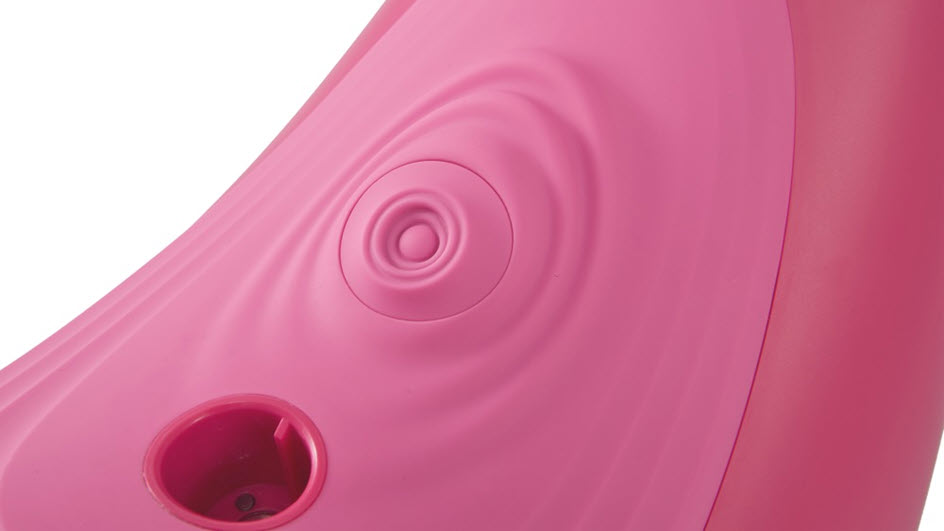
If there is one element that consistently impressed testers, it was the clitoral area of the Vibepad itself. The molded surface, soft grooves, and placement received repeated praise. One F28 tester described how naturally it aligned with her vulva, creating sensations that felt intentional rather than accidental. The vibrations were described as rich and satisfying without being harsh, and the shape allowed stimulation to remain consistent even as she shifted her weight or rocked forward and back.
This design feature stood out even among testers who preferred penetration over clitoral focus. The F41 tester, while less clitoris-oriented overall, still highlighted the advantage of having stimulation that remained present without demanding attention. It did not overpower her experience, but it supported it.
The mixed group picked up on another important aspect. Because the Vibepad Ride-On is large and accessible from multiple angles, clitoral stimulation could become part of a shared or partner-controlled experience. One tester noted that the remote allowed others to influence the experience in playful ways, turning solo pleasure into something social and interactive without becoming intrusive.
Ease of control emerged as both a strength and a frustration. The non-binary tester described the Vibepad Ride-On as very easy to handle and control, especially compared to similar devices that feel overly complex or stiff. Buttons responded predictably, and the overall interaction felt approachable rather than technical.
However, this experience was not universal. In the mixed group, multiple testers admitted they struggled to fully understand the modes and intensities during use. In a party context, where no one wants to stop and read instructions, the learning curve became noticeable. Several people expressed uncertainty about whether they had accessed all available modes or simply missed something due to unclear feedback from the controls.
This led to a recurring theme. The Vibepad Ride-On feels well thought out mechanically, but its interface does not always communicate clearly in the moment. For testers who enjoy intuitive exploration, this was manageable. For those who want immediate mastery and maximum intensity without experimentation, it was a barrier.
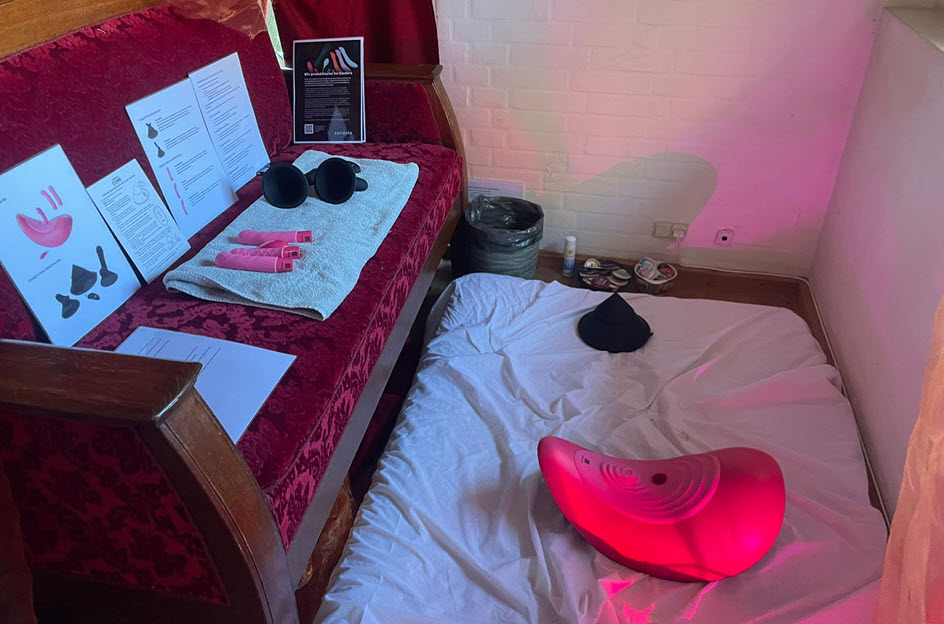
One of the most interesting outcomes of this test was how often testers framed the Vibepad Ride-On as a social or partner-inclusive toy, even when evaluating it primarily for solo use. The size, stability, and remote control encouraged interaction. One tester described how others could rock the base, adjust angles, or control modes, making pleasure feel collaborative rather than isolated.
This dynamic was not limited to mixed-gender groups. Even among the two women testing together, there was a sense that the Vibepad invited conversation, curiosity, and shared reflection. It was described less as something to hide away and more as something you bring out intentionally, perhaps even ceremonially.
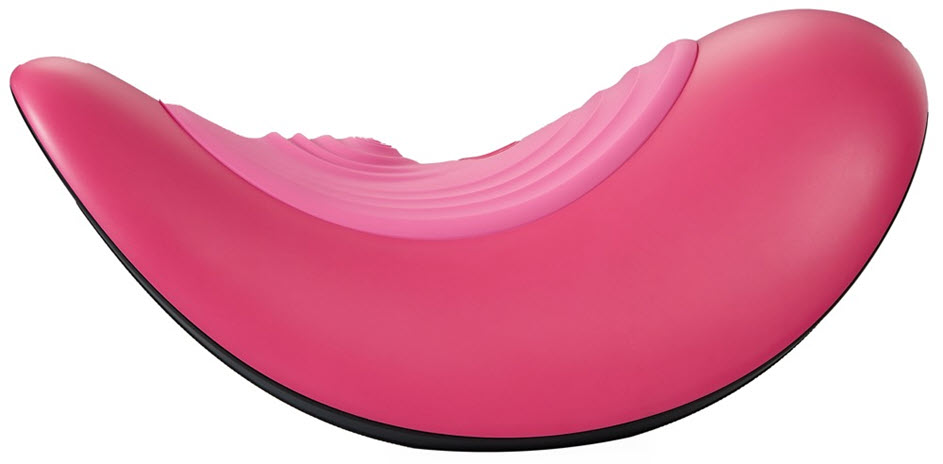
Aesthetics matter, especially for large toys. Several testers commented on the Vibepad Ride-On’s visual design, describing it as organic, sculptural, and more visually appealing than expected. One tester likened it to a high-end design object rather than a typical sex toy, noting the folds, curves, and overall finish as appealing.
At the same time, its size means it is not discreet. Multiple testers acknowledged that this is not a toy you casually store or forget about. One F28 tester framed this positively, suggesting it felt like something you intentionally return to, rather than something lost in a drawer.
No tester described the Vibepad Ride-On as perfect. The most consistent critique was intensity ceiling. For testers accustomed to extremely powerful vibrators, the Vibepad sometimes felt restrained. This was not universally negative, but it did mean that expectations matter.
Another limitation was the complexity of modes without clarity. The desire for simpler instructions or more obvious feedback came up repeatedly, especially in spontaneous or group settings. When pleasure depends on momentum, confusion can interrupt flow.
Finally, while the attachments offer variety, not all felt equally compelling to all bodies. This is not a flaw so much as a reminder that modular toys require personal alignment. What works beautifully for one anatomy may feel underwhelming or awkward for another.
Based on these tests, the Vibepad Ride-On is particularly well suited for people who enjoy:
It may be less ideal for those who want:
What stood out most across all testers was not a single feature, but a shared emotional response. Curiosity. Several testers expressed wanting to return to the Vibepad Ride-On alone, with time, or in different contexts. That is not a reaction people have to toys that merely perform. It is a reaction to toys that suggest possibility.
The Vibepad Ride-On does not try to be everything at once. Instead, it creates a physical environment where pleasure can unfold slowly, socially, and sometimes experimentally. For the right person, or people, it offers not just sensation, but a reason to stay present with the body longer than expected.
And that, ultimately, may be its most compelling feature.

