
A new Danish study challenges the notion of the dominant man as unambiguously harsh and controlling. Instead, the research paints a picture of dominance as something relational, in which responsibility, morality, attentiveness, and vulnerability play a far greater role than many people imagine.

A new Danish study challenges the simplistic, stereotypical image of the dominant man. Instead, it paints a more nuanced picture, where dominance is not just about power, but also about vulnerability, responsibility, trust, shame, and the discipline of exercising power thoughtfully.
There are topics that many people have an opinion on long before they actually know much about them. BDSM is one of them. And the dominant man is perhaps one of the figures most quickly reduced to a single trait: harsh, controlling, powerful.

But a new Danish study suggests that this image misses the mark. Not because dominance isn’t about power, but because the power in these narratives turns out to be far more dependent on relationship, trust, and attentiveness than stereotypical notions allow for. The study is based on 14 qualitative interviews with heterosexual dominant men in Denmark and examines how they got into BDSM, how they understand their role, and how they navigate issues of shame, morality, consent, and community.
The study also contributes to a broader conversation about how we understand and talk about sexuality in the first place. Here, Zandora’s CEO, Thomas Kjær, says:
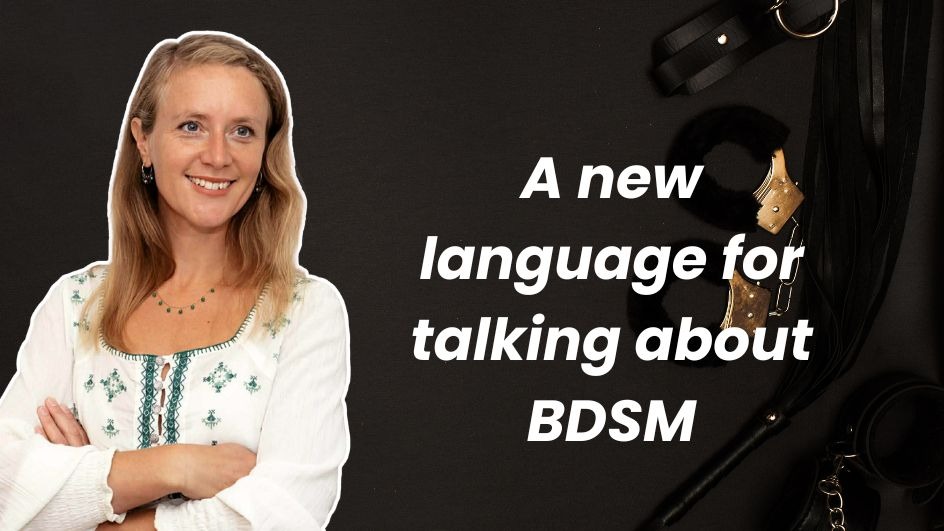
“What this study contributes is a new language for talking about BDSM. It challenges the flat, stereotypical image of the dominant man and instead points to a more complex reality, where dominance is not just about power, but also about vulnerability, responsibility, trust, shame, and the discipline of exercising power with care.”
This is precisely what the researchers found. In the study, dominance is not described as a simple exercise of control over another person. Rather, it is described as something relational—something that arises in interaction with the other person and that only works if there is trust, reciprocity, and a subtle ability to read what is happening along the way. Among other things, the researchers point out that participants experience a dependence on their partner’s reactions, and that the boundary between “me” and “you” in some situations becomes almost blurred in a very intense shared presence.
For Liv Friberg, a co-author of the article, this was precisely one of the most surprising findings. She says it was surprising how many words the men used to describe their vulnerable processes without using the word “vulnerability.” She believes this points to a lack of language and understanding regarding the dominant man as a vulnerable human being.
This is an important point because it turns the conventional notion on its head. In these narratives, dominance is not the absence of vulnerability. On the contrary. Several of the men describe that their greatest fear is not losing control in a dramatic way, but crossing a line, misunderstanding a partner, or ending up causing harm. Their self-perception as good and responsible in the dominant role depends heavily on the other person’s trust and recognition. Liv Friberg puts it this way:
“The only thing standing between their self-image as competent in the dominant role and as abusers was their partner’s smile and recognition. Their entire self-image lay in her hands.”
With this statement, she highlights just how fragile power can actually feel in these relationships.

The path into BDSM is also not described in the study as simple or self-evident. For several of the participants, it was associated with a deep internal negotiation. Not necessarily about masculinity in the narrow sense, but about morality, boundaries, and the question of what it actually means to be aroused by something that, from the outside, might resemble violence or punishment. The study describes how some had to reinvent themselves and find new ways to understand their desires before it could become an integral part of their self-understanding.
This experience is echoed by one of the participants, who was also interviewed for the article. He explains that he didn’t struggle with his thoughts about masculinity, but rather with morality and boundaries. For him, it wasn’t about equating BDSM with violence or abuse, but about how the nature of the play could trigger thoughts about where the line was drawn and whether he was handling it correctly.
“I’ve had many moral conflicts. I’ve spent a lot of energy trying to find peace with the idea of whether I was an abuser or if what I was doing was violence.”
When something went wrong, he says, “I just fall apart.” That’s why it’s crucial for him that morality and boundaries are clear, and that both parties agree on what they’re doing.
Shame is another central theme. Several of the men in the study describe how they struggled for years with desires centered on pain, restraint, control, or punishment. Not necessarily because they wanted to hurt anyone, but because they had learned that certain actions were wrong, and especially that men were not allowed to be violent toward women. For some, the challenge therefore became finding a way to distinguish between abuse and consensual BDSM, both in practice and in their own self-understanding.
Liv Friberg points out that the men were concerned with being “decent” and good people. They had learned early on that it is wrong to hit others, and especially women. As she puts it, “BDSM practices are not violence, but can resemble violence,” and therefore, being the one who acts becomes a balancing act.
This is precisely why consent and responsibility become so crucial in both the study and the interviews. Here, consent is not portrayed as a formality that can be settled once and for all with a safeword and a quick agreement beforehand. On the contrary, both the research and one of the male participants describe a far more dynamic and demanding responsibility. It’s about being emotionally present, keeping an eye out, listening, sensing, and reading the other person the entire time.
He puts it very bluntly when he calls the safeword “some of the most false sense of security out there, if you ask me.” For him, it’s far more important to check in along the way and focus his attention on the other person than to sit around waiting for a word. He describes it as a constant check-in, where he reads reactions and relies on his intuition more than he listens for a safeword.
This aligns with the study’s description of BDSM as something deeply physical and emotionally intense. The participants talk about reading breathing, tension in the body, sounds, movements, and eye contact. It also challenges the notion of BDSM as something cold or mechanical. Instead, it appears here as a form of concentrated presence, where both partners are intensely focused on each other.
He clearly recognizes that aspect. He says he believes that BDSM can be just as healing as it is sexual. For him, it is “something very relational and something very deep between people.”
The study also points out that the BDSM community means far more than just sex and play. For many of the participants, the community was a place where they could learn, find support, share experiences, and feel less alone. Here, shame could be replaced by recognition and a sense of belonging. Here, one could speak more openly and meet others who understood one’s experiences from the inside.
This sentiment is echoed by one of the male participants. He describes how the community offers a different kind of understanding than what one encounters in the outside world. You avoid the small talk about what you did over the weekend, and you can feel more accepted for who you are. As he says, it means “an enormous amount to feel accepted as a human being.”
But the study does not romanticize the environment. It also reveals a community with hierarchies, rivalries, and disagreements. The participants describe both camaraderie and competition, both support and status struggles. There are also tensions between more traditional and more modern ways of understanding dominance, gender, and responsibility. In other words: Community is not the same as the absence of conflict.
And that nuance is precisely what matters. The study does not claim that BDSM is risk-free, or that all dominant men think or act the same way. It is a small qualitative study based on 14 interviews with heterosexual dominant men in Denmark, primarily white, between the ages of 30 and 70, and all active in the BDSM community. It provides depth, but not a complete picture of everyone who practices BDSM. As Liv Friberg herself emphasizes, qualitative research cannot establish truths once and for all. Instead, it can help us better understand how certain people interpret their experiences and open the door to a more nuanced conversation.
This may well be the study’s most important contribution. Not to shut down the conversation, but to improve it. To provide a language that is more precise than the old caricatures. A language in which dominance is not reduced to raw power, but is understood as something that also encompasses doubt, discipline, attentiveness, moral reflection, and dependence on the other. And in a public conversation about sex, consent, shame, and masculinity, that is actually no small thing.

