
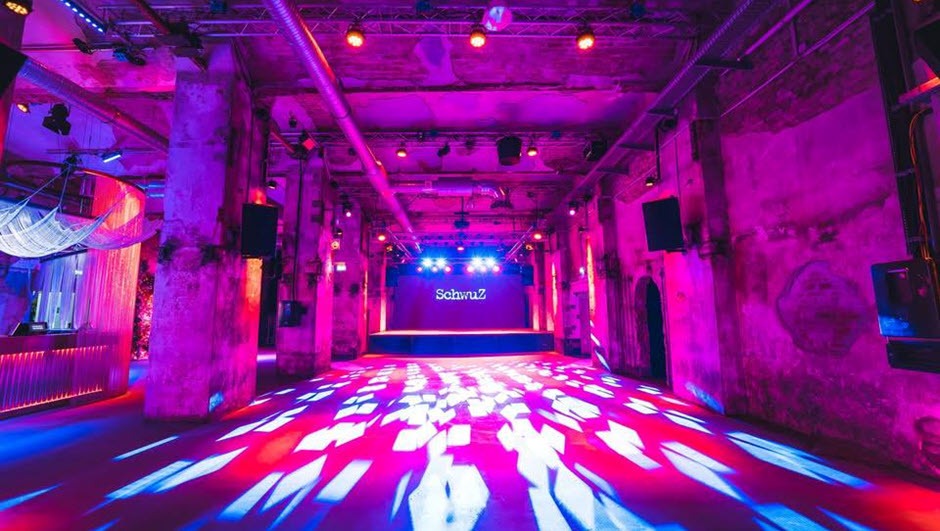
After almost half a century as a cornerstone of Berlin’s queer nightlife, SchwuZ has announced its permanent closure on November 1. The news marks a deeply emotional moment for Germany’s LGBTQ+ community and reflects the growing crisis in the city’s once-vibrant club scene.

“Writing these words is incredibly difficult for us,” began SchwuZ’s statement shared this week on social media. “Unfortunately, we have to announce that SchwuZ will have to close.”
The message confirmed what many in Berlin’s nightlife had long feared. Despite months of talks with potential investors and extensive efforts to save the club, no party was willing or able to take over operations. “We tried everything, but in the end, it wasn’t enough,” the statement read.
The team behind SchwuZ expressed both heartbreak and gratitude, inviting the community to make the most of the remaining weeks. “Let’s come together once more—to dance, to laugh, to cry, to share memories, and to celebrate everything we have created together.”
Their final event, set for November 1, will be both a farewell and a celebration. “A farewell, but also a thank you,” they wrote. “Thank you to all of you who gave your heart and soul, creativity and perseverance to make this adventure called SchwuZ possible since 1977.”
Founded in 1977, SchwuZ—short for SchwulenZentrum (“Gay Center”)—began as a political and cultural meeting place for Berlin’s gay liberation movement. What started as a safe space for marginalized voices quickly grew into one of Europe’s most famous queer clubs.
Over the decades, SchwuZ hosted everything from drag performances and live concerts to art installations, film screenings, and political events. Its 1,600-square-meter venue in Neukölln became a labyrinth of concrete halls and dancefloors that welcomed thousands of visitors each week.
Unlike many nightlife venues that catered to specific groups, SchwuZ embraced the full spectrum of the LGBTQ+ community. It became a meeting point for gay men, lesbians, trans and nonbinary people, and allies—celebrated for its inclusivity long before it was fashionable.
For many Berliners, SchwuZ was a home. It offered not only freedom of expression but also a sense of belonging that shaped generations of queer identity in the city.
The closure comes after months of financial uncertainty. The club filed for bankruptcy earlier this year, appealing to the community for support in a last-minute effort to survive. A crowdfunding campaign raised around €52,000, but the goal of €300,000—theminimum needed to continue operations—proved unreachable.
The SchwuZ team had also engaged in negotiations with potential investors, hoping to find a partner capable of sustaining the club. Those talks ultimately failed. “There is no person or group of people that is willing or financially able to continue to operate SchwuZ in its current state,” the club wrote.
The economic struggles of SchwuZ are part of a broader crisis in Berlin’s once-vibrant club scene. According to the city’s Clubcommission, nearly half of Berlin’s venues have considered closing within the next year, citing rising rents, energy costs, and changing nightlife habits.
Berlin’s club culture, long considered one of the world’s most innovative and open, is facing unprecedented pressure. The same city that became a global symbol of freedom and artistic expression is now losing some of the very spaces that defined it.
For the queer community, the loss of SchwuZ is more than the closing of a nightclub. It represents the disappearance of a space that provided safety, creativity, and connection for nearly five decades.
In a city that has seen the rise and fall of countless clubs, SchwuZ stood out as an institution that balanced celebration with activism. It was a place where politics, art, and sexuality met—where queer culture wasn’t only tolerated but celebrated.
Generations of artists, performers, and DJs found their voice on SchwuZ’s stages. Its events often blurred the line between nightlife and performance art, between protest and party.
That blend of resistance and joy is what made SchwuZ unique. It was never just about music or dancing; it was about visibility, community, and the shared experience of being unapologetically oneself.
Berlin’s nightlife has always been more than entertainment. For decades, it has been a political statement—a living reminder of the freedom that emerged from a divided city. But that freedom is now being tested by economic realities.
Rising property prices and stricter regulations have forced many venues to shut down. Energy costs and inflation have added further strain, while younger audiences increasingly seek different kinds of social experiences.
Even legendary venues like Griessmühle, Watergate, and Remise have faced closure or relocation in recent years. Together, these losses paint a worrying picture of a city losing some of its cultural heartbeat.
SchwuZ’s announcement acknowledges that reality with honesty and grace. “We tried everything,” they wrote. “But in the end, it wasn’t enough.”
Before closing its doors for good, SchwuZ plans to celebrate its legacy with a final party on November 1—anevent the team describes as both a farewell and a thank-you.
“Let’s dance, laugh, cry, and share all the memories,” they wrote. “To celebrate everything we have created together.”
For those who have passed through its doors over the years, that night will be a deeply emotional moment. It will not only mark the end of one of Europe’s most influential queer clubs but also honor the countless lives, loves, and creative sparks that found a home there.
While SchwuZ may soon go quiet, its impact will echo far beyond its walls. The club inspired generations to express themselves freely and helped shape Berlin’s reputation as a city where diversity and creativity could thrive.
In many ways, SchwuZ embodied the essence of queer resilience—the ability to create beauty and connection even in adversity. Its closing serves as a reminder that such spaces are vital to cultural and emotional wellbeing.
As Berlin’s queer community prepares to say goodbye, the message from SchwuZ remains one of love and gratitude. “With gratitude and a heavy heart we say: Cheers Queers, Your SchwuZ.”
For nearly fifty years, it was more than a nightclub. It was a family.

